Independent Global Intelligence • London • Frankfurt • New York
Advertisement
Front Page/Crypto/Zcash’s 25-second blocks go live on public testnet ahead of schedule
Cryptovia CoinDesk
5 October 2026 at 04:41•3 min read
Zcash’s 25-second blocks go live on public testnet ahead of schedule
Zcash’s 25-second blocks go live on public testnet ahead.
High-resolution curated imagery via CoinDesk wire syndication.
Executive Takeaways • Key Intelligence
▪Strategic intelligence desk confirms key developments surrounding NU7 cuts the target block time from 75 seconds to 25, giving.
▪International stakeholders analyze: Zcash has activated an upgrade on its public test network that cuts the targeted
▪Multilateral policy, financial liquidity, and regulatory frameworks face direct realignments.
Advertisement
In an authoritative intelligence dispatch verified through CoinDesk, significant international developments have emerged regarding Zcash’s 25-second blocks go live on public testnet ahead of schedule. Observers across key diplomatic, corporate, and policy corridors are actively parsing the immediate impact, as corroborated by verified wire filings.
NU7 cuts the target block time from 75 seconds to 25, giving exchanges, wallets and developers a live rehearsal before a planned November mainnet launch. Zcash has activated an upgrade on its public test network that cuts the targeted wait between batches of transactions from 75 seconds to 25, beginning a public trial before a planned November rollout.
The upgrade, called NU7, switched on at block 4,465,026. Zakura, software that follows Zcash and checks its transactions, now lists the new rules as active on public testnet. Its earlier, separate testing network has been shut down. Each block records a batch of payments.
Advertisement
Advertisement
Producing them more frequently could shorten the wait for a merchant to accept a payment or an exchange to credit a deposit. A service waiting for three confirmations would face a targeted wait of about 75 seconds instead of 225, if it kept its confirmation requirement unchanged. Actual block times vary.
The test network uses coins without monetary value, giving developers and infrastructure operators somewhere to check the changes before they affect real ZEC. Both major node programs now support the trial. Zakura released its implementation Oct. 1, while the Zcash Foundation published a test version of Zebra the following day.
Operators need compatible software to follow the upgraded test network. Read More: Zcash targets November upgrade to make private payments up to three times faster NU7 also changes where transaction fees go. Miners receive 40%, while the remaining 60% is removed from circulation and recorded in a reserve intended to fund future mining rewards.
Advertisement
Advertisement
Those rewards pay miners to keep checking transactions as the amount of newly issued ZEC declines. Faster blocks would not triple the creation of new coins. The scheduled reward per block falls to one-third, preserving the issuance schedule. The underlying catalysts behind these events trace back to evolving structural dynamics across the Crypto landscape.
Over recent quarters, multilateral authorities and market participants have navigated mounting volatility, heightening the urgency of coordinated responses and policy alignment. Senior analysts and industry stakeholders underscore that strategic transparency remains paramount.
As institutional delegations evaluate risk models and operational contingencies, secondary dispatches indicate that further compliance directives and consultative reviews will be initiated in the coming cycle. Broader economic and regulatory ramifications are projected to ripple across interconnected regional ecosystems.
Advertisement
Advertisement
Market analysts note that supply chains, capital allocations, and policy frameworks must swiftly assimilate these verified updates to insulate against systemic bottlenecks.
The Global Post's editorial desk will continue rigorous monitoring of this developing story, with periodic updates provided as official statements and primary documentation are released by relevant governing bodies.
In an authoritative briefing verified via CoinDesk, OKXICE, the joint venture of OKX and ICE, plans to launch tokenized U.S. stocks under SEC's new innovation exemption. OKXICE, a joint venture between crypto exchange OKX and NYSE parent Intercontinental Exchange (ICE), has notified the U.S. Securities and Exchange Commission (SEC) that it plans to launch a tokenized stock trading venue. Former New York Gov. Andrew Cuomo, the venture's co-chair, announced the move on X. The venue will start. Global policy observers continue assessing the strategic trajectory and broader market reverberations.
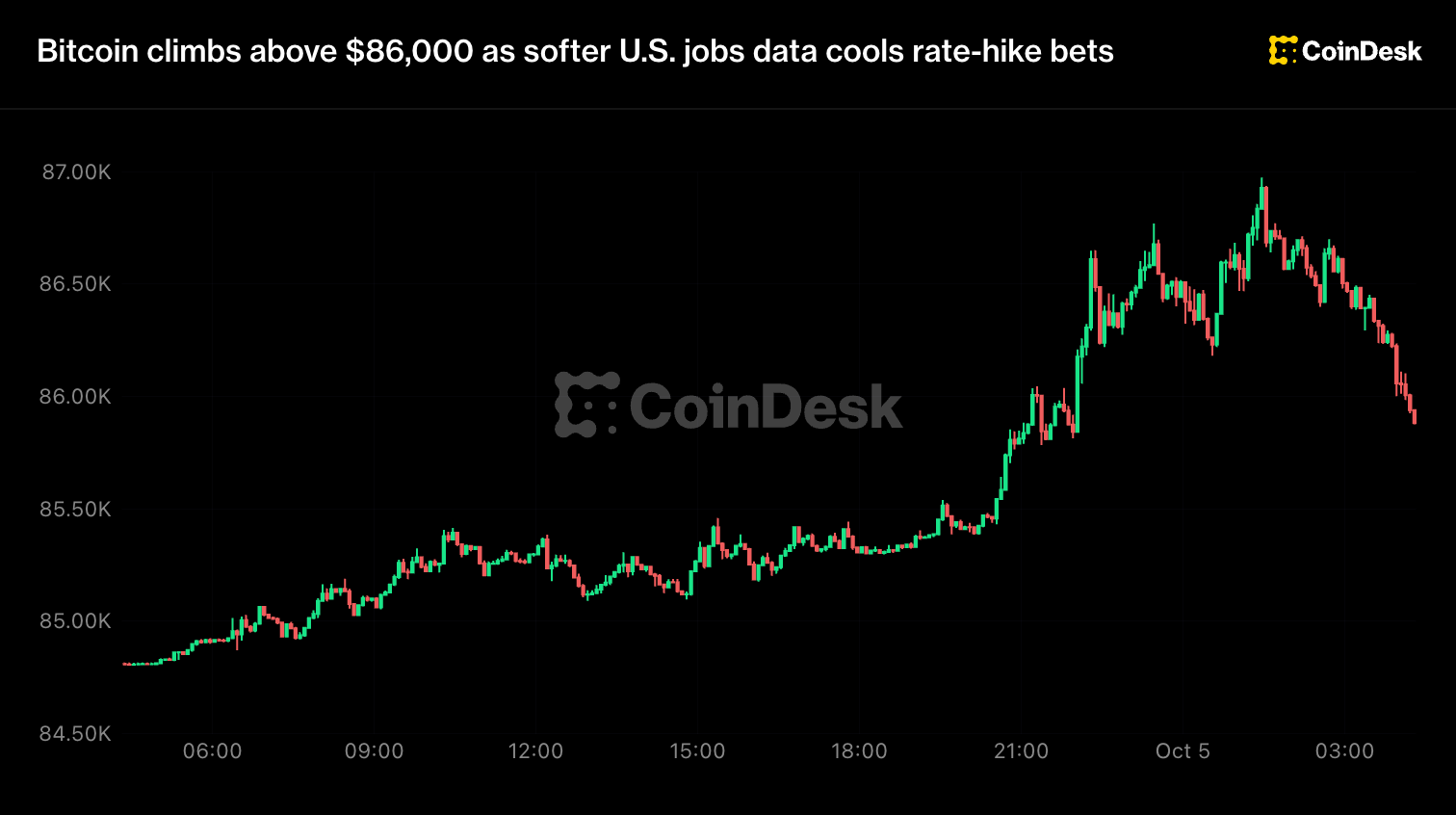
In an authoritative briefing verified via CoinDesk, Bitcoin came within about $500 of its late-September peak before sellers pushed it back under $86,000. It's the second rally in a week to stall. Bitcoin zoomed to nearly $87,000 early Monday, within about $500 of its eight-month high. It then reversed to just under $86,000 as of Monday Asian morning hours and is still up 1.3% over 24 hours. DOGE led the majors with a gain of more than. Global policy observers continue assessing the strategic trajectory and broader market reverberations.
In an authoritative briefing verified via CoinDesk, Ether beat bitcoin in the third quarter, but its market liquidity got thinner, according to Coingecko. Ethereum's native token ether ETH$2,719.61 had a better third quarter than bitcoin BTC$86,231.99. Still, it got harder to trade, as liquidity, or how easily a token can be bought and sold without moving its price, thinned out. Ether's price surged 70% in the quarter, outpacing bitcoin's 42% gain. Yet between July 6 and Sept. Global policy observers continue assessing the strategic trajectory and broader market reverberations.
In an authoritative briefing verified via CoinDesk, Congress is gone from Washington for the final pre-election recess, and it's time to take stock of what's going on ahead of November. The U.S. is holding its midterm election in a month, on November 3. The results will determine whether Republicans or Democrats control the House of Representatives and the Senate, and that in turn will determine what next year looks like for crypto (and, I suppose, other) industries. Global policy observers continue assessing the strategic trajectory and broader market reverberations.
In an authoritative briefing verified via CoinDesk, Crypto firms have spent years building financial products on blockchains. Getting people to use them — and keep using them — is becoming the next challenge. The crypto industry has spent years building infrastructure for financial products and putting novel creations on top of those rails. Now comes the harder part: getting people to actually use these products. That question is becoming more pressing across the industry as crypto moves. Global policy observers continue assessing the strategic trajectory and broader market reverberations.
In an authoritative briefing verified via CoinDesk, Crypto M&A has hit record levels, but the Clarity Act’s Senate setback leaves dealmakers weighing how much regulatory uncertainty still matters. This is an excerpt from the ‘CoinDesk Insider’ newsletter that will be launching soon. Sign-up details will be here when it goes live. The crypto industry had waited years for Congress to deliver what it has long wanted: a lasting U.S. rulebook for digital assets that would clarify which. Global policy observers continue assessing the strategic trajectory and broader market reverberations.