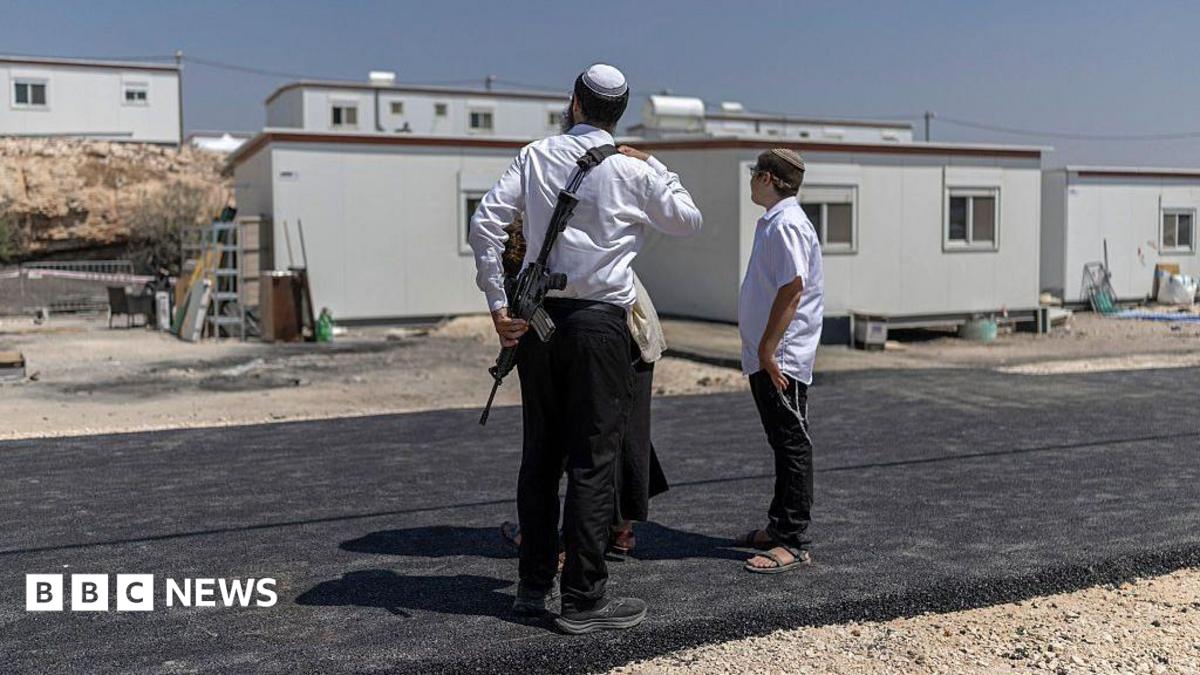
In an authoritative intelligence dispatch verified through BBC News, significant international developments have emerged regarding Paul Adams: British-Israeli relations at lowest ebb in decades. Observers across key diplomatic, corporate, and policy corridors are actively parsing the immediate impact, as corroborated by verified wire filings. Israel's response to London's trade ban with Israeli settlements in the occupied West Bank shows how important this moment is. Watch: There is ethnic cleansing in areas of the West Bank, says Miliband Israel's furious response to the British government's decision to ban trade with Israeli settlements in the occupied West Bank testifies to just how important this moment is. Britain took the brunt of Israel's anger, but the fact that 12 countries chose to move together clearly sharpened the sense of outrage. Officials in London always knew that such a dramatic shift in policy towards Israel-Palestine was going to elicit a hostile response, but seemed taken aback by the speed and ferocity of Israel's reaction. The closure of the UK's consulate in East Jerusalem, which serves the West Bank and deals directly with the Palestinian Authority in Ramallah, and the removal of British representatives from the International Gaza Support Centre, the body set up last year to co-ordinate stabilisation and relief efforts in the Gaza Strip, are very hostile moves. They tell you that Israel is deeply troubled by Tuesday's action by the UK and 11 other countries, which include France, Spain and Canada. Products manufactured in settlements may not represent a significant proportion of Israel's exports, but the political symbolism of singling these out for special treatment is powerful. Image source, Ilia YEFIMOVICH / AFP via Getty ImagesImage caption, Three Israeli settlers - including an armed one - stand outside houses after the reopening of a settlement at Ganim in the Israeli-occupied West Bank in August
The underlying catalysts behind these events trace back to evolving structural dynamics across the Global Politics landscape. Over recent quarters, multilateral authorities and market participants have navigated mounting volatility, heightening the urgency of coordinated responses and policy alignment.
Senior analysts and industry stakeholders underscore that strategic transparency remains paramount. As institutional delegations evaluate risk models and operational contingencies, secondary dispatches indicate that further compliance directives and consultative reviews will be initiated in the coming cycle.
Broader economic and regulatory ramifications are projected to ripple across interconnected regional ecosystems. Market analysts note that supply chains, capital allocations, and policy frameworks must swiftly assimilate these verified updates to insulate against systemic bottlenecks.
The Global Post's editorial desk will continue rigorous monitoring of this developing story, with periodic updates provided as official statements and primary documentation are released by relevant governing bodies.