Independent Global Intelligence • London • Frankfurt • New York
Advertisement
Front Page/Crypto/Swift blockchain ledger requires key internal layers, Taurus co-founder.
Cryptovia CoinDesk
7 October 2026 at 11:59•3 min read
Swift blockchain ledger requires key internal layers, Taurus co-founder.
Swift blockchain ledger requires key internal layers,.
High-resolution curated imagery via CoinDesk wire syndication.
Executive Takeaways • Key Intelligence
▪Strategic intelligence desk confirms key developments surrounding Banks need their own permissioned ledger, wallet tools and s.
▪International stakeholders analyze: Swift’s new blockchain-based ledger may be ready for live payments, but banks st
▪Multilateral policy, financial liquidity, and regulatory frameworks face direct realignments.
Advertisement
In an authoritative intelligence dispatch verified through CoinDesk, significant international developments have emerged regarding Swift blockchain ledger requires key internal layers, Taurus co-founder warns. Observers across key diplomatic, corporate, and policy corridors are actively parsing the immediate impact, as corroborated by verified wire filings.
Banks need their own permissioned ledger, wallet tools and smart-contract capabilities before they can use Swift’s tokenized-deposit network, Taurus’s Lamine Brahimi said.
Swift’s new blockchain-based ledger may be ready for live payments, but banks still need their own digital-asset infrastructure before they can connect to it, according to Lamine Brahimi, co-founder and managing partner of custody and tokenization firm Taurus. “If you want to connect today to the Swift ledger, you need three things,” Brahimi said in an interview with CoinDesk.
Advertisement
Advertisement
” This criteria means Swift’s ledger is a replacement for a bank’s internal systems. It is an orchestration layer designed to enable institutions to move tokenized deposits across borders around the clock, while final settlement continues through existing arrangements.
The banks still need systems to hold and manage tokenized deposits, digital asset wallets and smart contracts used in the process. Swift said in July that 17 banks were preparing live tokenized-deposit transactions, signalling its first move to modernize its bank messaging system which has dominated the traditional financial sector since the 1970s. 5 quadrillion a year.
HSBC and Standard Chartered completed the first live interbank transaction using Swift’s ledger in August. DBS and Citi later executed a weekend cross-border dollar payment in minutes, rather than up to two business days.
Advertisement
Advertisement
Brahimi said the extra technology is not necessarily a major hurdle for banks already issuing digital assets or managing digital assets nor does he believe it will hold Swift back from continuing to dominate its sector. Brahimi said the need for additional infrastructure should not be read as a weakness in Swift’s design.
The ledger is still an early-stage product, he said, but it gives banks a choice between existing payment rails and tokenized deposits that can move around the clock. “I think it’s a good move,” he said. ” Taurus recently announced its Swift integration in August.
Brahimi said the firm provides the three required layers through one platform: a permissioned ledger, wallet-management tools and tokenization and smart-contract software. He said competitors may require banks to use multiple vendors for those functions. The underlying catalysts behind these events trace back to evolving structural dynamics across the Crypto landscape.
Advertisement
Advertisement
Over recent quarters, multilateral authorities and market participants have navigated mounting volatility, heightening the urgency of coordinated responses and policy alignment. Senior analysts and industry stakeholders underscore that strategic transparency remains paramount.
As institutional delegations evaluate risk models and operational contingencies, secondary dispatches indicate that further compliance directives and consultative reviews will be initiated in the coming cycle. Broader economic and regulatory ramifications are projected to ripple across interconnected regional ecosystems.
Market analysts note that supply chains, capital allocations, and policy frameworks must swiftly assimilate these verified updates to insulate against systemic bottlenecks.
Advertisement
Advertisement
The Global Post's editorial desk will continue rigorous monitoring of this developing story, with periodic updates provided as official statements and primary documentation are released by relevant governing bodies.
In an authoritative briefing verified via CoinDesk, Tom Lee said Bitmine will be “done stacking” once it owns 5% of ETH, setting an end date to an accumulation streak that began in mid-2025 and made the company the world's largest Ethereum treasury. Ether ETH$2,574.56, the second-largest cryptocurrency, is about to lose one of its most persistent sources of demand as Ethereum-focused digital asset treasury firm Bitmine BMNR$24.89·Market Closed will soon stop accumulating the token. Bitmine chairman Tom. Global policy observers continue assessing the strategic trajectory and broader market reverberations.
In an authoritative briefing verified via CoinDesk, The firm is putting its own capital into stablecoin and tokenized gold vaults as institutional finance moves further onchain. Crypto trading and market-making firm GSR is committing $100 million to a new onchain credit business, betting that vaults will become a bigger part of how institutional investors put digital and tokenized assets to work. The business, dubbed Hare, is being built alongside liquidity distribution platform Turtle and will create and. Global policy observers continue assessing the strategic trajectory and broader market reverberations.
In an authoritative briefing verified via CoinDesk, Your day-ahead look for Oct. 7, 2026 This is an excerpt from CoinDesk newsletter 'Daybook.' Sign up here, if you haven't already. Bitcoin BTC$83,679.61 and the other majors are lower today, but zoom out and the picture is flatter than the daily tape suggests: prices have gone essentially nowhere over the past two weeks. The choppy trading is a part of a typical stair-step rally, according to some observers, and. Global policy observers continue assessing the strategic trajectory and broader market reverberations.
In an authoritative briefing verified via CoinDesk, Traders betting on higher prices took the brunt of the forced selling, while oil climbed on Iranian tanker attacks. Fed minutes are due later Wednesday. Traders betting on higher prices took the brunt of the forced selling, while oil climbed on Iranian tanker attacks. Fed minutes are due later Wednesday. The global bond sell-off continues, with U.S. Treasury yields rising across the curve and pressure spreading across Europe and the. Global policy observers continue assessing the strategic trajectory and broader market reverberations.
In an authoritative briefing verified via CoinDesk, Yearly buyer cohorts and U.S. spot ETF investors offer a map of potential support and resistance as bitcoin retreats below $84,000. Only one yearly bitcoin BTC$83,734.97 buyer cohort remains underwater, according to checkonchain data: investors who bought in 2025, with an average cost basis of approximately $88,000, which may now be forming a key resistance level due to sell pressure from relatively recent buyers. Bitcoin reached a monthly high of. Global policy observers continue assessing the strategic trajectory and broader market reverberations.
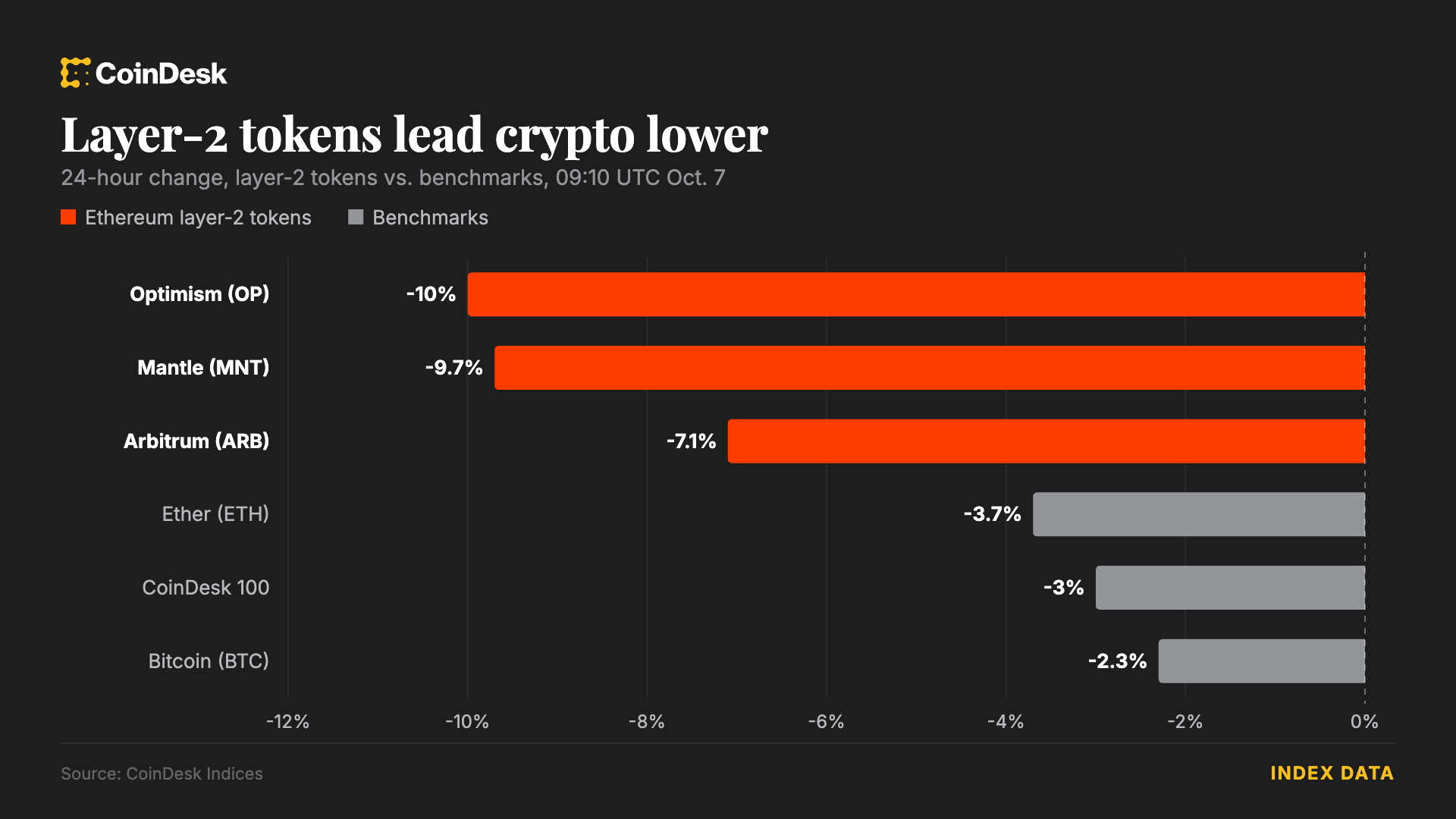
In an authoritative briefing verified via CoinDesk, Bitcoin fell below $84,000 as oil climbed on Iranian tanker attacks, while smaller tokens fell harder and liquidations rose to $547 million. Bitcoin BTC$83,734.97 slipped below $84,000 shortly after midnight UTC after Iran stepped up attacks on tankers in the Strait of Hormuz, pushing Brent Crude above $101 a barrel and lifting Treasury yields and the dollar. The damage grew heavier further down the market, as the CoinDesk 80, which. Global policy observers continue assessing the strategic trajectory and broader market reverberations.