Independent Global Intelligence • London • Frankfurt • New York
Advertisement
Front Page/Crypto/The SEC Is finally modernizing transfer-agent rules. Wall Street must.
Cryptovia CoinDesk
30 September 2026 at 11:00•3 min read
The SEC Is finally modernizing transfer-agent rules. Wall Street must.
The SEC Is finally modernizing transfer-agent rules. Wall.
High-resolution curated imagery via CoinDesk wire syndication.
Executive Takeaways • Key Intelligence
▪Strategic intelligence desk confirms key developments surrounding If ownership data is split across a token wrapper, a special.
▪International stakeholders analyze: Securities and Exchange Commission proposed the first major update to its transf
▪Multilateral policy, financial liquidity, and regulatory frameworks face direct realignments.
Advertisement
In an authoritative intelligence dispatch verified through CoinDesk, significant international developments have emerged regarding The SEC Is finally modernizing transfer-agent rules. Wall Street must not repeat the ‘paperwork crisis’.
Observers across key diplomatic, corporate, and policy corridors are actively parsing the immediate impact, as corroborated by verified wire filings.
If ownership data is split across a token wrapper, a special-purpose vehicle (SPV), a broker’s internal ledger and a transfer agent's off-chain database, we are setting the stage for a Paperwork Crisis for the blockchain age, argues Fairmint’s Joris Delanoue. On Sept. S.
Advertisement
Advertisement
Securities and Exchange Commission proposed the first major update to its transfer-agent rules since the late 1970s. While part of the agency’s ongoing modernization efforts as the world moves from paper records to electronic data, the change is also future-proofing securities rules for the burgeoning world of tokenization.
” This is not a blanket endorsement of tokenization, but a recognition of the power of blockchains for record-keeping. Transfer agents are a critical part of the securities industry, by design. They keep the official list of who owns what, process transfers, handle restrictive legends and sit inside the national clearance and settlements systems, working with the DTCC.
In other words, they’re the entity — the official register — that proves a share is a share. Blockchains can be and are being used to improve this system. Tokens trade continuously 24/7, settle faster and increase distribution.
Advertisement
Advertisement
Yet, unless the tokens themselves are the assets they’re supposed to represent, then they’re just creating a countless amount of digital wrappers around the actually important paper certificates. Wall Street has already lived through a version of this story, in the Paperwork Crisis.
In the late 1960s, an unexpected surge of trading volume overwhelmed the manual, paper-based system used to process and clear stock transactions, causing back offices to fall catastrophically behind. For half a year, the NYSE was forced to close on Wednesdays to clear the backlog. Compounding the issue — there was not a single authoritative list of who owned what.
The industry eventually solved the crisis by shifting from decentralized physical tracking to centralized digital recordkeeping. The Depository Trust Company, formed in 1973, effectively "immobilized" physical certificates in a central vault, allowing ownership to be transferred through electronic bookkeeping, a system that still underpins modern global financial markets.
Advertisement
Advertisement
The underlying catalysts behind these events trace back to evolving structural dynamics across the Crypto landscape. Over recent quarters, multilateral authorities and market participants have navigated mounting volatility, heightening the urgency of coordinated responses and policy alignment.
Senior analysts and industry stakeholders underscore that strategic transparency remains paramount. As institutional delegations evaluate risk models and operational contingencies, secondary dispatches indicate that further compliance directives and consultative reviews will be initiated in the coming cycle.
Broader economic and regulatory ramifications are projected to ripple across interconnected regional ecosystems. Market analysts note that supply chains, capital allocations, and policy frameworks must swiftly assimilate these verified updates to insulate against systemic bottlenecks.
Advertisement
Advertisement
The Global Post's editorial desk will continue rigorous monitoring of this developing story, with periodic updates provided as official statements and primary documentation are released by relevant governing bodies.
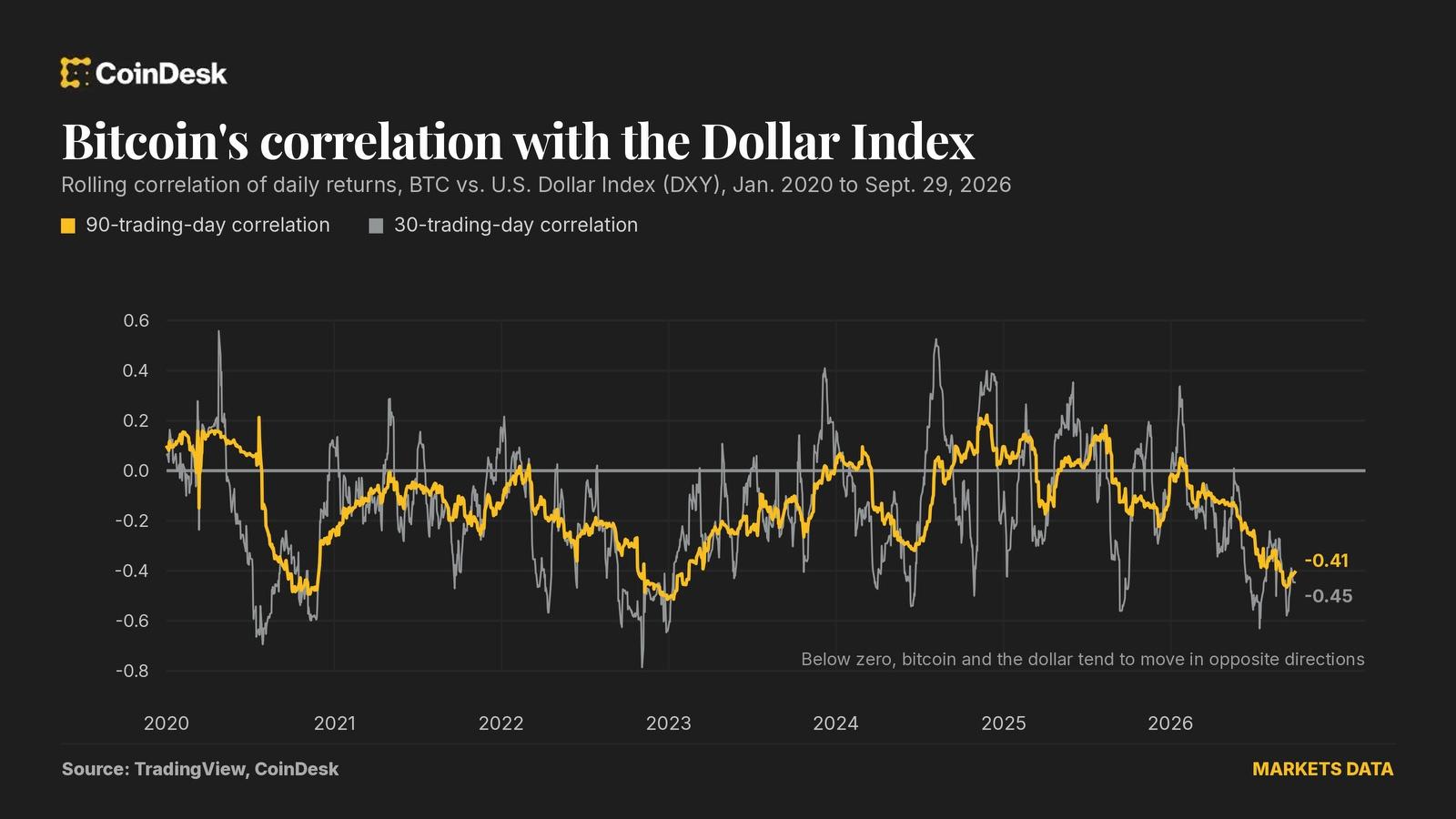
In an authoritative briefing verified via CoinDesk, Your day-ahead look for Sept. 30, 2026 This is an excerpt from CoinDesk newsletter 'Daybook.' Sign up here, if you haven't already. The U.S. Dollar Index (DXY) is rallying, which is usually seen as bad news for bitcoin BTC$83,797.13 and other dollar-denominated assets such as gold. The data suggest the link is weaker than that view implies. DXY, which tracks the dollar against a basket of major currencies, including the. Global policy observers continue assessing the strategic trajectory and broader market reverberations.
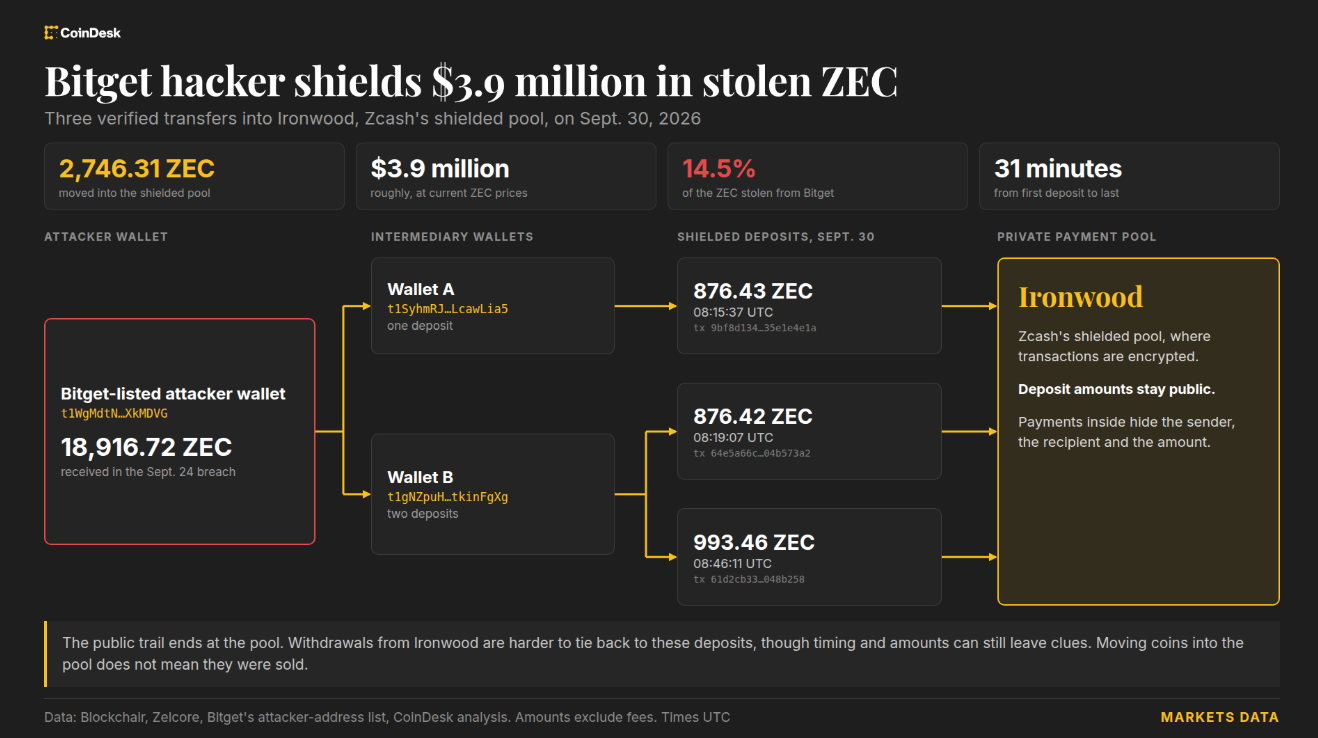
In an authoritative briefing verified via CoinDesk, Three transfers pushed about 15% of the stolen ZEC into Ironwood, where payments hide their senders, recipients and amounts. Wallets linked to Bitget’s $387.5 million hack moved about $3.9 million in zcash (ZEC) into the cryptocurrency’s private payment system on Wednesday, making the stolen funds harder to follow as the exchange tries to recover them. CoinDesk’s review of transaction records found that 2,746 ZEC entered Ironwood, Zcash’s newest shielded pool,. Global policy observers continue assessing the strategic trajectory and broader market reverberations.
In an authoritative briefing verified via CoinDesk, Six companies signed a safety pact covering hacking and biological threats, with no penalties or deadline for putting the checks in place. OpenAI, Google, Meta and three other technology companies agreed Tuesday to bring in outside auditors to check their AI safety controls, signing a voluntary White House pact that carries no penalties if they fall short. President Donald Trump called the agreement "morally binding." It has no enforcement mechanism. Global policy observers continue assessing the strategic trajectory and broader market reverberations.
In an authoritative briefing verified via CoinDesk, Independent directors cite management’s financial risk and restructuring role, but leave questions about Gerovich’s exercised shares and MMXX Ventures unanswered. Metaplanet’s (3350) independent directors defended its 10th series of stock acquisition rights, the executive equity scheme that drew shareholder protests over dilution. In a Sept. 29 letter, the directors said management purchased the rights at fair value using personal funds when the company, then a struggling hotel operator, faced a. Global policy observers continue assessing the strategic trajectory and broader market reverberations.
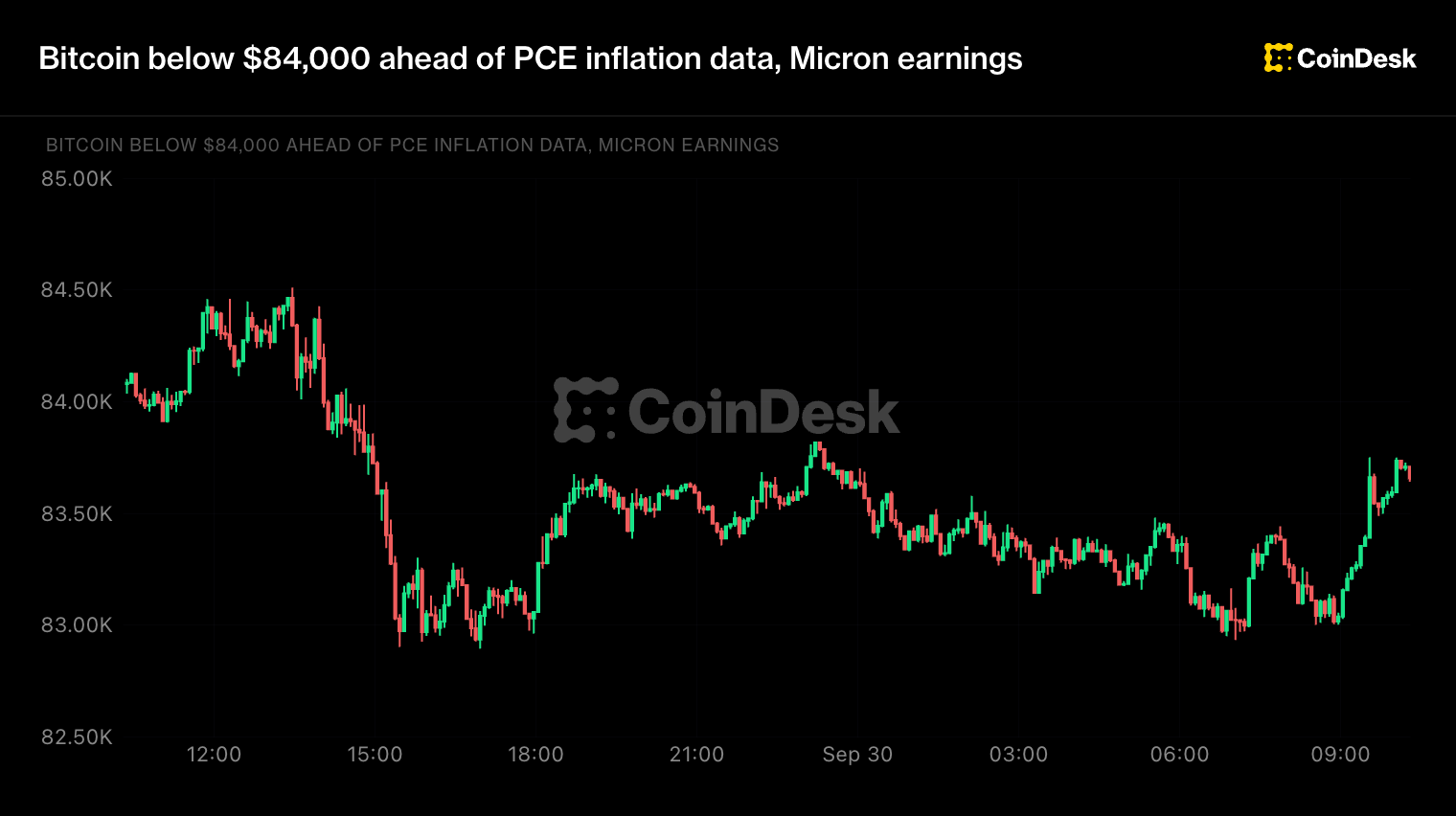
In an authoritative briefing verified via CoinDesk, Traders are waiting on the Fed's favored inflation gauge after a month of oil-driven rate-hike bets that sent 30-year Treasury yields to their highest since 2002. Traders are waiting on the Fed's favored inflation gauge after a month of oil-driven rate-hike bets that sent 30-year Treasury yields to their highest since 2002. Bitcoin slipped 0.3% to about $83,700 early Wednesday, U.S. time. Traders are waiting on the personal consumption expenditures. Global policy observers continue assessing the strategic trajectory and broader market reverberations.
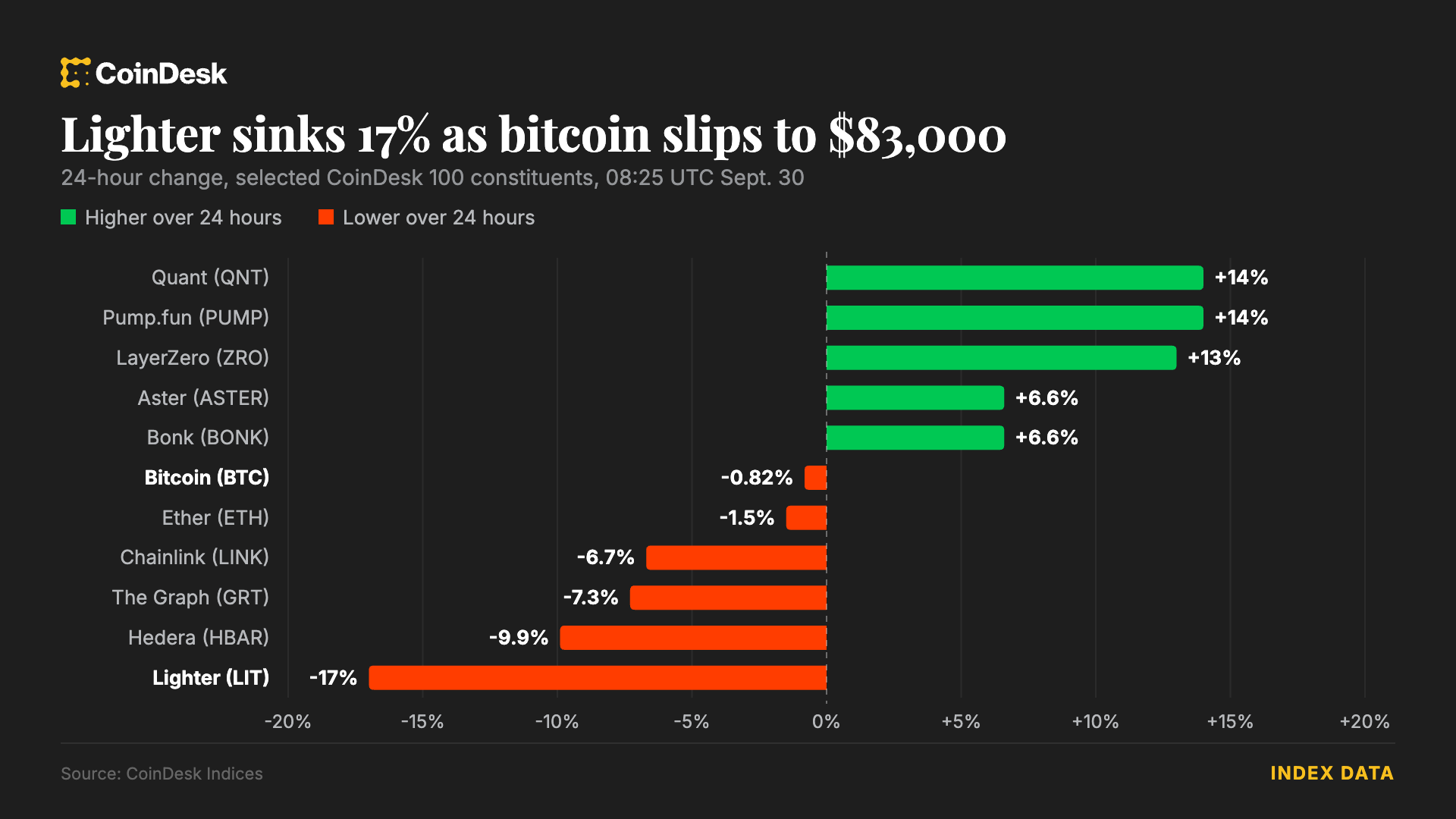
In an authoritative briefing verified via CoinDesk, Bitcoin held near $83,000 as the 30-year Treasury yield topped 5.6%, while DeFi tokens reversed and lighter fell after Robinhood unveiled U.S. perps. Bitcoin BTC$83,831.57 traded at $83,164 in the European morning, down 0.57% since midnight UTC while the rest of the crypto market was mixed, with 50 constituents of the CoinDesk 100 higher and 50 lower. The 24-hour pictures is weaker as bitcoin lost around 1%, falling from a. Global policy observers continue assessing the strategic trajectory and broader market reverberations.