High-resolution curated imagery via CoinDesk wire syndication.
Executive Takeaways • Key Intelligence
▪Strategic intelligence desk confirms key developments surrounding The five-month application window precedes the new regulator.
▪International stakeholders analyze: Cryptocurrency companies wishing to operate in the U.K have five months to submi
▪Multilateral policy, financial liquidity, and regulatory frameworks face direct realignments.
Advertisement
In an authoritative intelligence dispatch verified through CoinDesk, significant international developments have emerged regarding Clock's ticking: UK's crypto regulatory application window opens with February deadline. Observers across key diplomatic, corporate, and policy corridors are actively parsing the immediate impact, as corroborated by verified wire filings.
The five-month application window precedes the new regulatory framework’s planned introduction in October 2027, after years of legislative development. K have five months to submit applications to the country’s financial regulator. The Financial Conduct Authority (FCA) opened its “authorization gateway” on Wednesday, giving firms until the end of Februrary 2027 to register.
’s regime for the supervision of digital asset firms has been a long time coming, with the initial legislative work going back to 2022. ’s progress towards the formal regulation of cryptocurrency and the companies operating therein appeared somewhat sluggish compared to other regimes such as the European Union (EU). ’s relevant Act of Parliament was just becoming law.
Advertisement
Advertisement
Things started to take shape late last year, however, with the announcement that the FCA’s framework would take effect in October 2027, preceded by the requisite window for companies to apply for licensing. The February 2027 deadline represents a punchy five-month process for firms to make their applications.
In theory, the companies that already received registration under the FCA’s existing regime, which focused on anti-money laundering primarily, may find much of the heavy lifting has already been done. One of those 60+ companies is Zumo, a crypto infrastructure platform which won registration in 2021.
K Cryptoasset Regulation Tracker,” telling firms what the rules will require them to do and mapping timelines for regulatory milestones. “Everyone else publishing a traceker is a law firm or consultancy. We’re developing ours as industry operators,” Nick Jones, founder and CEO of Zumo, said in an emailed announcement on Wednesday.
Advertisement
Advertisement
The underlying catalysts behind these events trace back to evolving structural dynamics across the Crypto landscape. Over recent quarters, multilateral authorities and market participants have navigated mounting volatility, heightening the urgency of coordinated responses and policy alignment.
Senior analysts and industry stakeholders underscore that strategic transparency remains paramount. As institutional delegations evaluate risk models and operational contingencies, secondary dispatches indicate that further compliance directives and consultative reviews will be initiated in the coming cycle.
Broader economic and regulatory ramifications are projected to ripple across interconnected regional ecosystems. Market analysts note that supply chains, capital allocations, and policy frameworks must swiftly assimilate these verified updates to insulate against systemic bottlenecks.
Advertisement
Advertisement
The Global Post's editorial desk will continue rigorous monitoring of this developing story, with periodic updates provided as official statements and primary documentation are released by relevant governing bodies.
In an authoritative briefing verified via CoinDesk, You're reading Crypto Long & Short, our weekly newsletter featuring insights, news and analysis for the professional investor. Sign up here to get it in your inbox every Wednesday. Note: The views expressed in this column are those of the author and do not necessarily reflect those of CoinDesk, Inc., CoinDesk Indices or its owners and affiliates. The conversation around artificial intelligence has become dominated by a familiar question: Which. Global policy observers continue assessing the strategic trajectory and broader market reverberations.
In an authoritative briefing verified via CoinDesk, Petrobras is testing the blockchain in two research projects aimed at preventing emissions benefits from being counted twice and tracing fuel data across production and use. Petrobras, Brazil’s state-controlled energy company, is testing the Cardano blockchain to track claims about lower-carbon fuel, in two research projects announced Wednesday by the Cardano Foundation shared with CoinDesk. One covers sustainable aviation fuel, a lower-carbon alternative to conventional jet fuel that can be. Global policy observers continue assessing the strategic trajectory and broader market reverberations.
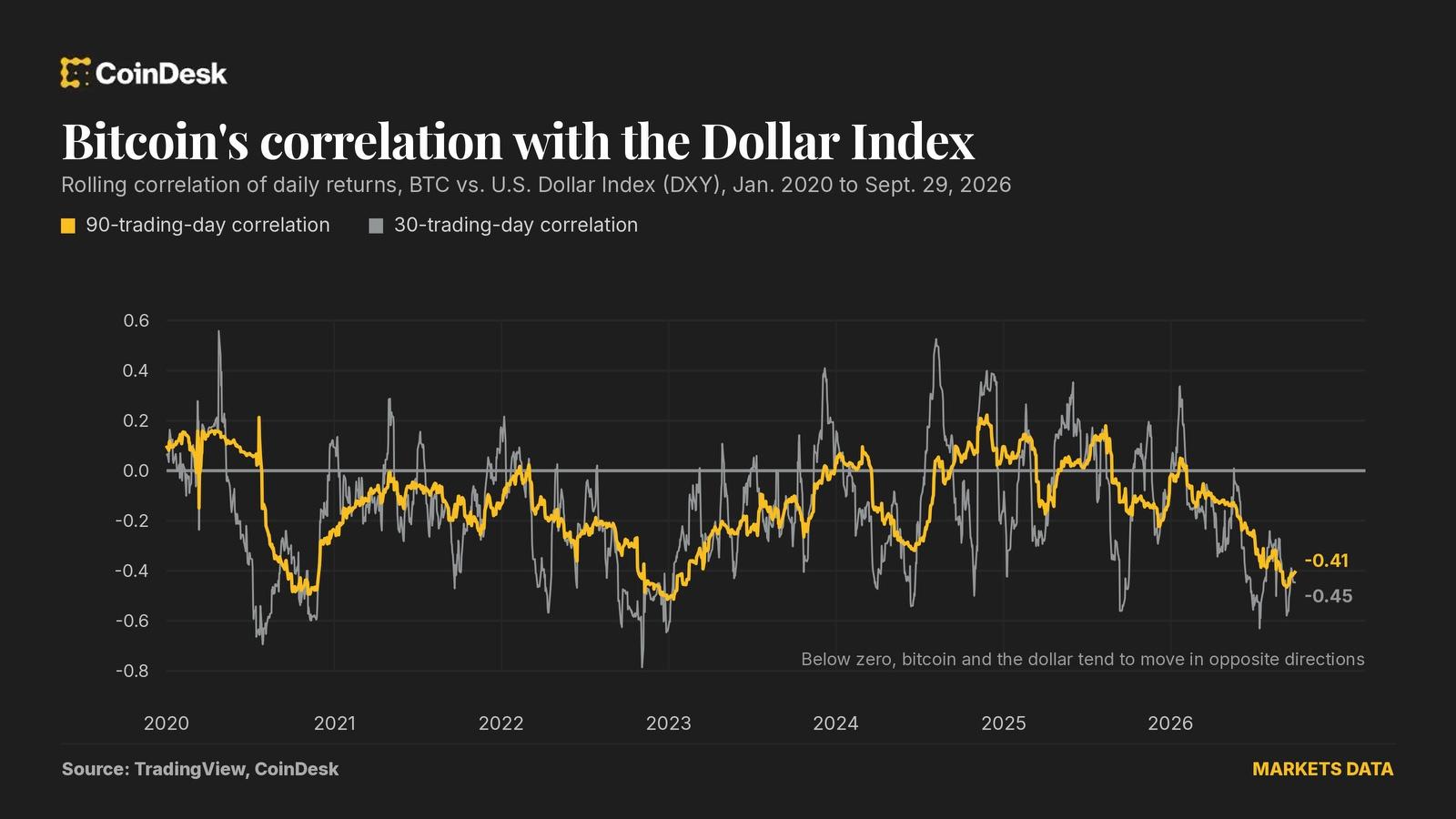
In an authoritative briefing verified via CoinDesk, Your day-ahead look for Sept. 30, 2026 This is an excerpt from CoinDesk newsletter 'Daybook.' Sign up here, if you haven't already. The U.S. Dollar Index (DXY) is rallying, which is usually seen as bad news for bitcoin BTC$83,797.13 and other dollar-denominated assets such as gold. The data suggest the link is weaker than that view implies. DXY, which tracks the dollar against a basket of major currencies, including the. Global policy observers continue assessing the strategic trajectory and broader market reverberations.
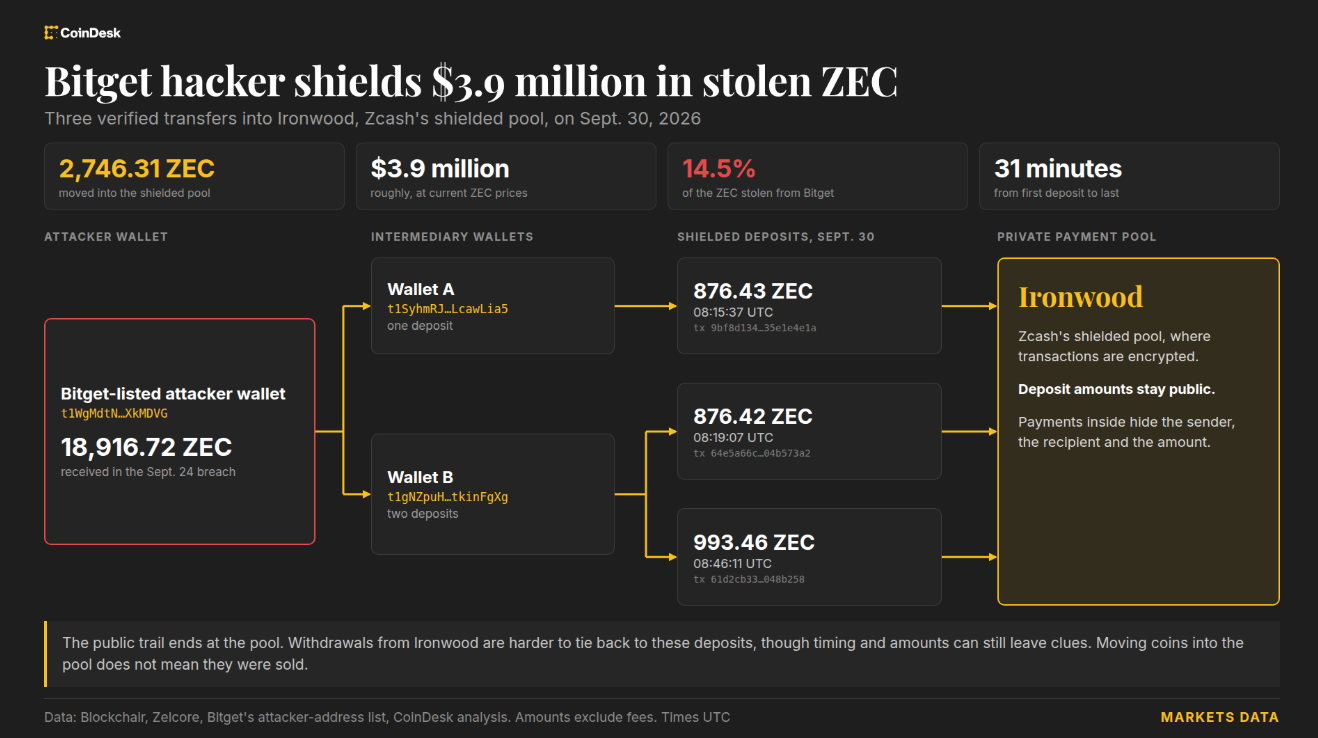
In an authoritative briefing verified via CoinDesk, Three transfers pushed about 15% of the stolen ZEC into Ironwood, where payments hide their senders, recipients and amounts. Wallets linked to Bitget’s $387.5 million hack moved about $3.9 million in zcash (ZEC) into the cryptocurrency’s private payment system on Wednesday, making the stolen funds harder to follow as the exchange tries to recover them. CoinDesk’s review of transaction records found that 2,746 ZEC entered Ironwood, Zcash’s newest shielded pool,. Global policy observers continue assessing the strategic trajectory and broader market reverberations.
In an authoritative briefing verified via CoinDesk, If ownership data is split across a token wrapper, a special-purpose vehicle (SPV), a broker’s internal ledger and a transfer agent's off-chain database, we are setting the stage for a Paperwork Crisis for the blockchain age, argues Fairmint’s Joris Delanoue. On Sept. 1, the U.S. Securities and Exchange Commission proposed the first major update to its transfer-agent rules since the late 1970s. While part of the agency’s ongoing modernization efforts. Global policy observers continue assessing the strategic trajectory and broader market reverberations.
In an authoritative briefing verified via CoinDesk, Six companies signed a safety pact covering hacking and biological threats, with no penalties or deadline for putting the checks in place. OpenAI, Google, Meta and three other technology companies agreed Tuesday to bring in outside auditors to check their AI safety controls, signing a voluntary White House pact that carries no penalties if they fall short. President Donald Trump called the agreement "morally binding." It has no enforcement mechanism. Global policy observers continue assessing the strategic trajectory and broader market reverberations.